

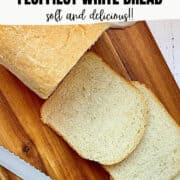
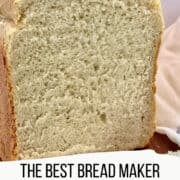
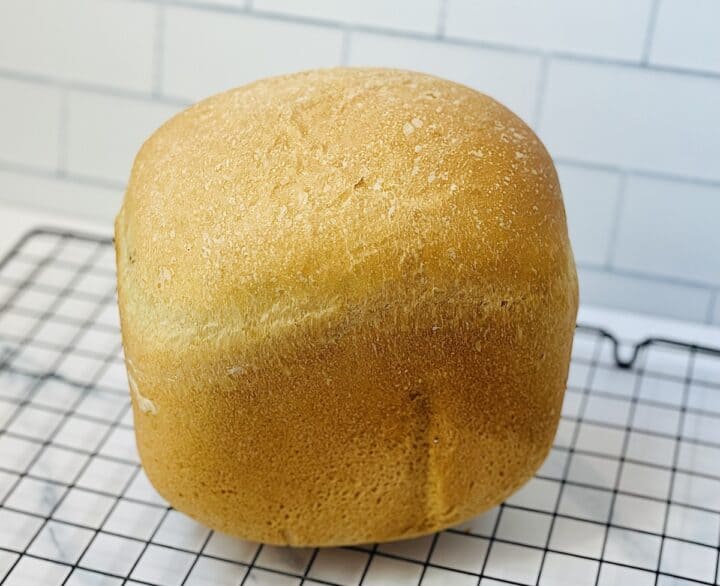
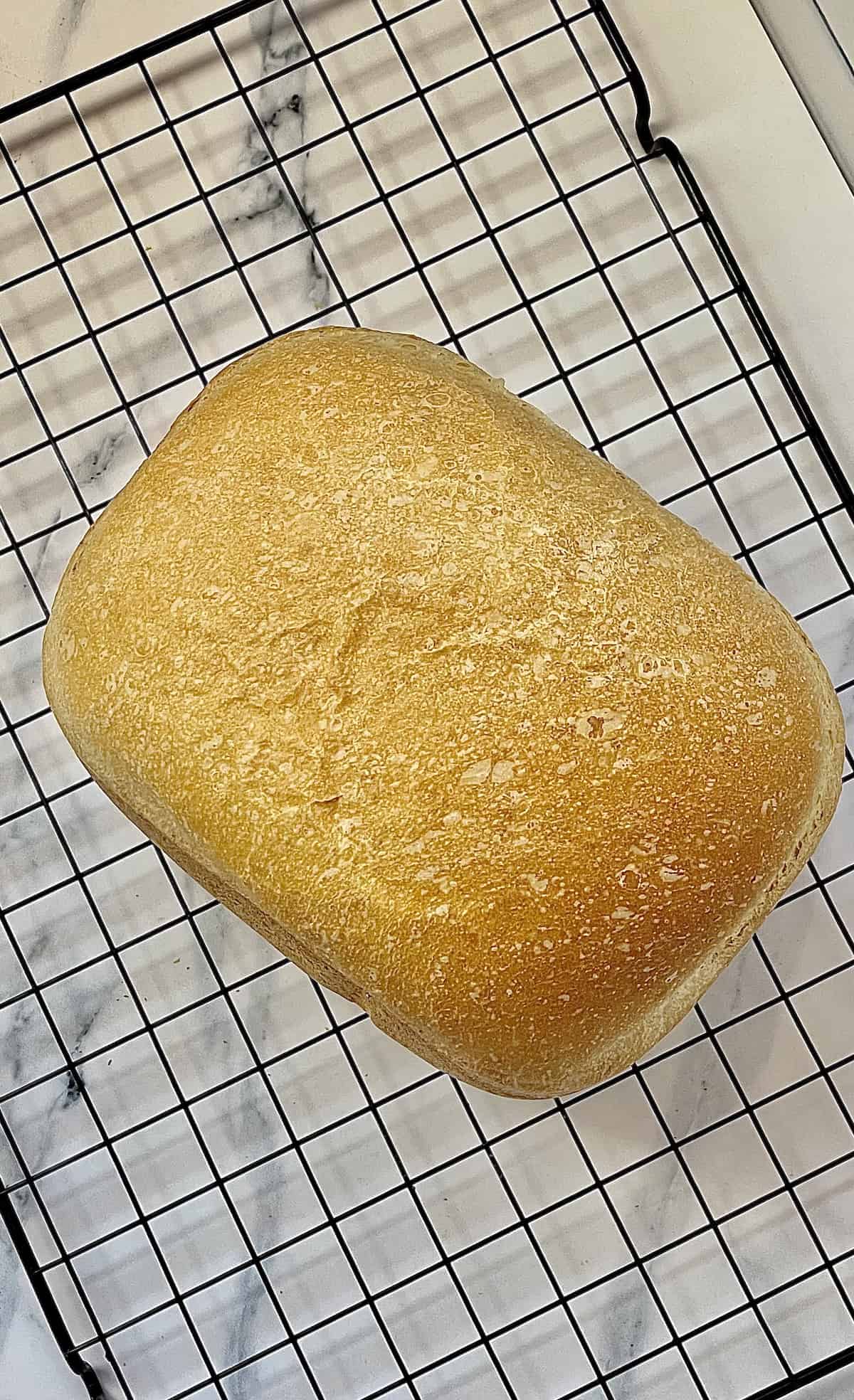
This Bread Machine White Bread is the recipe that beginner bread machine users save first and experienced bakers make on repeat. With just 7 simple pantry ingredients and a bread machine, you'll have a tall, fluffy and golden loaf with a light and springy texture. It makes a 1.5 pound loaf, but I include ingredient amounts for both 1 and 2 pound loaves below too.
This versatile recipe works in every brand bread machine and is perfect for beginners and makes a great everyday bread for sandwiches, toast and more. And if something goes wrong, the troubleshooting section below has everything you need to know to fix it.
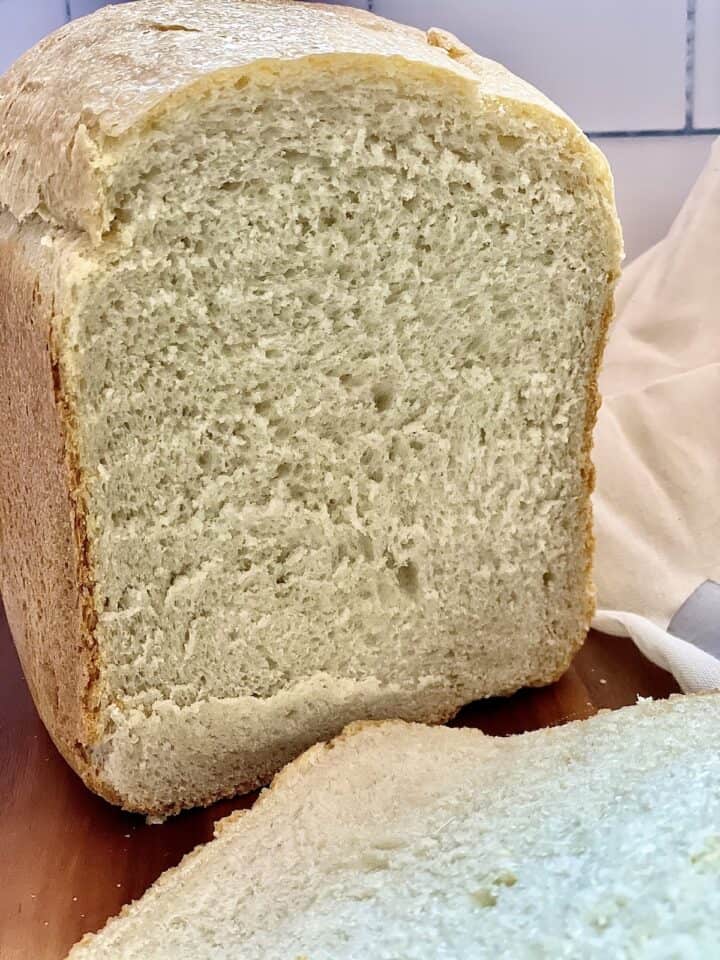
Table Of Contents
Why I Love This Recipe
This white bread recipe is beginner-friendly and uses basic pantry ingredients. It's effortless and foolproof-the machine does all the heavy lifting and about 3 hours later you have a perfect loaf that's better than store bought bread. I make it on repeat because it's so versatile.
Stock it in your freezer for quick meals, like grilled cheese or toast. It's a great snacking spread with roasted tomatoes or roasted garlic. Once you master this easy recipe, you can add in things like cheese and herbs. I do this to make cheese bread and rosemary parmesan bread- both also big hits with my family and stocked in my freezer at all times.
Why This Recipe Works
- Uses simple pantry ingredients
- Most white bread recipes use only water as the liquid, but this one uses olive oil and butter too which makes a soft and chewy crumb.
- The ratio of flour to yeast creates a strong rise without a collapsed loaf- a common problem for bread machine breads.
- Reliable results, even for beginners
Ingredients For Bread Machine White Bread
This recipe makes a 1.5 pound loaf. For other loaf sizes, see the notes in the recipe card below.
- 1 cup warm water
- 2 tablespoon unsalted butter
- 1 tablespoon olive oil
- 1 teaspoon salt
- 1 tablespoon sugar
- 3 cups bread flour
- 1 ¾ teaspoon yeast
Ingredient Notes
- Yeast - you can use instant yeast, bread machine yeast or active dry yeast in bread maker recipes. I like the outcome of my bread machine recipes most when I use instant dry yeast, so I stick with this. Do not proof yeast before putting into the bread pan.
- Bread flour: with it's relatively high protein content, bread flour is preferred for making light, fluffy and airy bread recipes. King Arthur bread flour is my preferred brand. You can use all-purpose flour as well, but the texture may be a little less soft and springy.
- Olive oil: I use extra virgin olive oil. Substitute with vegetable oil if preferred.
- Water: water should be warmed to between 110 and 115 degrees Fahrenheit. You can also use warm milk for a slightly different flavor.
- Sugar: you can simply omit the sugar for a sugar-free white bread loaf.
How To Make Bread Machine White Bread
- Add all ingredients to the bread pan in the order listed (or follow your machine's recommended order).
- Select the Basic or White Bread cycle. Choose 1.5 lb loaf size and desired crust color.
- After 10-15 minutes, check the dough. If sticky add 1 tablespoon flour as needed. If dry add 1 teaspoon water as needed.
- Let the cycle finish. Remove bread and cool for 10-15 minutes before slicing.
Pro Tips For Perfect Bread Machine Bread
- Use fresh yeast for the best rise.
- Keep salt and yeast separate until mixing begins.
- Check the dough early in the kneading stage. If it looks too wet add more flour in small increments until a tacky ball forms. If it's too dry add more water in small amounts.
- Measure flour correctly. Either spoon and level or weigh it.
Troubleshooting Bread Machine Bread
Why Did My Bread Collapse?
A sunken or collapsed top is usually caused by one of three things: too much liquid, too much yeast, or overproofing. If the loaf collapses, it means that the dose rose too fast for the structure to support and then fell under it's own weight while baking. Humidity in the room could play a factor here- on humid days, you may need to use less liquid. Next time, try reducing the liquid by a few tablespoons, cutting the yeast back by ¼ teaspoon at a time, or reducing the sugar by ½ tablespoon at a time. I recommend trying one of these fixes at a time, so you know which causes the top to collapse initially.
Overproofing usually isn't the reason loaves collapse in a bread machine, as the machine functions to control the length of time that dough is proofed.
Why Is My Bread Dense And Heavy?
Dense bread usually means that the yeast didn't completely do it's job. Expired yeast is the most common cause, so always check the expiration date. Yeast can be stored in the freezer to expand it's life.
Water temperature can contribute to dense loaves, too. Always check the temperature- anything over 120 degrees Fahrenheit will kill and inactivate yeast and anything below 100 degrees Fahrenheit won't activate it.
And last, using too much flour is another common cause. Always scoop and level the flour. If you're just beginning or using a new recipe, keep an eye on the dough in the first 5-10 minutes and add more flour or liquid if needed, until you have a springy, tacky ball of dough instead of one that is too wet or crumbly.
Why Didn't My Bread Rise?
If the loaf didn't rise much or at all, the yeast was likely dead, killed by water that was too hot, or not activated by water that was too cold. To check if your yeast is good, do a yeast test by mixing ½ teaspoon with ¼ cup of water. Wait 10 minutes to see if a foamy liquid forms. If not, the yeast is dead and you'll need new. You always want to make sure the salt was not added where it could make contact with the yeast. Salt kills yeast immediately.
Why Did My Bread Overflow The Pan?
If the dough rose over the top of the bread pan touching the window, you likely used too much yeast or sugar. However, humidity can play a factor here too, as on humid days the dough will rise a little quicker and higher. On humid days, use a little less sugar and/or yeast. Also check that you've set the machine to the correct loaf size, which is an overlooked problem we sometimes accidentally make, but it's any easy fix.
How To Store Bread Machine Bread
- Room temperature: up to 3 days in an airtight bread storage bag or plastic bag.
- Freezer: up to 6 months. Slice the entire loaf and lay slices flat in freezer safe storage bags. Pull out individual slices as needed. They can go straight from the freezer to the toaster!
- Thawing: frozen slices can go straight from the freezer to the toaster or oven. Or, let thaw at room temperature for about 60 minutes. Avoid heating in the microwave as it can make the slices rubbery.
What To Use White Bread For
- Sandwiches
- Toast with butter or jam (or a simple nutella toast, strawberry toast or peanut butter toast)
- French toast
- Garlic bread
- Dipping into soups
Along with bread machine garlic bread, white bread is also delicious as a side with Moroccan chicken stew, turned into pepperoni toast or meatball toast, and dipped into slow cooker potato soup.
Recipe FAQs
Bread flour is best because it creates a lighter, more elastic texture. You can use all-purpose flour but the loaf may not be as light and springy.
Add liquids first, followed by sugar, salt, flour and yeast. The salt and yeast should never directly touch. I recommend checking your manufacturer's booklet to see if they have a specific way to add ingredients. Otherwise, this is the basic rule to follow to get a great loaf
Bread machine yeast or instant yeast gives the most reliable results.
Recipe
Best Bread Machine White Bread Recipe (Soft, Fluffy & Foolproof)
Ingredients
- 1 cup warm water approximately 110°F
- 1 tablespoon extra virgin olive oil
- 2 tablespoon butter room temperature and sliced into ¼ inch pieces
- 1 teaspoon salt
- 1 tablespoon white sugar
- 3 cups bread flour
- 1 ¾ tsp yeast instant, active dry, or bread machine
Instructions
- Add all ingredients to the bread pan in the order listed (or your manufacturer's recommended order if different).
- MACHINE BAKE: Select the basic/white bread setting. Choose the 1.5 lb loaf size and your preferred crust color. At the end of the last kneading cycle, remove the kneading paddle. If you miss this step, remove the paddle using oven mitts after the bread cools. When baking is complete, let cool for 10 minutes, then remove from the bread pan.
- OVEN BAKE: Select the dough cycle and 1.5 lb loaf. When done, remove the dough ball from the pan, punch down a few times and shape as desired (or split into 2 balls and place in 2 loaf pans). Let rise in a warm place until doubled in size, about 40 minutes. Bake at 350 degrees Fahrenheit for 30-40 minutes or until the internal temperature reached 190 degrees.
- Cool on a wire rack for at least 15 minutes before slicing. Slice with a serrated bread knife and enjoy. Store sliced bread in an airtight container at room temperature for up to 3 days or in the freezer for up to 6 months.
Notes
- 1 ½ cup warm water
- 2 tablespoon olive oil
- 2 tablespoon butter
- 1 ½ teaspoon salt
- 2 tablespoon white sugar
- 4 cups bread flour
- 1 ¾ teaspoon yeast
- ¾ cup warm water
- 1 tablespoon olive oil
- 1 tablespoon butter
- ¾ teaspoon salt
- ½ tablespoon white sugar
- 2 cups bread flour
- 1 ¼ teaspoon yeast

Londyn says
Can I use plant-based butter?
Kristina Tipps says
Yes! Any fat would be okay. Olive oil works too.
Anonymous says
Love it. I've made it a few times now and even use it to make soft rolls. I only make 1lb at a time but it is the softest bread recipe I've tried so far. Don't think I plan to try others because this one has nailed it every time. Why bother with another, lol?
Cory Teuscher says
I have tried this recipe twice now and Both times the bread collapsed?
Following the recipe to a T I don't get it I'm using bread machine yeast
Kristina Tipps says
It sounds like the dough is rising too quickly, causing it to collapse. I would try a different yeast, either active or instant. Or, use the bread machine yeast but cut back on the sugar (use 1/2 of what the recipe calls for or none at all).
Tenaya Reiner says
I have made the 2lb, the 1.5lb and the 1lb. The first one I made was the 2lb. It exploded out of my bread machine. I followed it to the tee. It left uncooked bread smooshed into my bread window. I cut the majority of it off and the bread was actually great. Then I decided to try the 1lb. The one pound was teeny tiny. Good bread but wow it was so small. Why?? So I just did the 1.5lb. It smooshed up into my bread window again! But this time it wasnt sticky. So at least that’s good. I actually love this recipe because it does give good fluff like normal bread, but I can’t figure out a happy medium. The measurements are off somewhere. I think you’re close but this isn’t right. I’m gonna keep playing with it cuz it’s close. I’m gonna try 3/4 water next time with the 1.5lb and see how it goes.
Debbie says
We love this recipe. I make it once or twice a week for toast. Comes out perfect every time. I use the Kitchen Arm bread machine. I have been using this recipe for about 6 months now. Thanks for the fantastic white bread recipe!
Valinda says
I’m trying this recipe. I added 1/4 C active sourdough starter. We’ll see how she turns out.
MarthaJane says
Hands down best white bread!